AvCarb > Articles > AvCarb Supports Sonnax Transmission Company in Advancing Woven Carbon Technology for Wet Friction Applications
AvCarb Supports Sonnax Transmission Company in Advancing Woven Carbon Technology for Wet Friction Applications
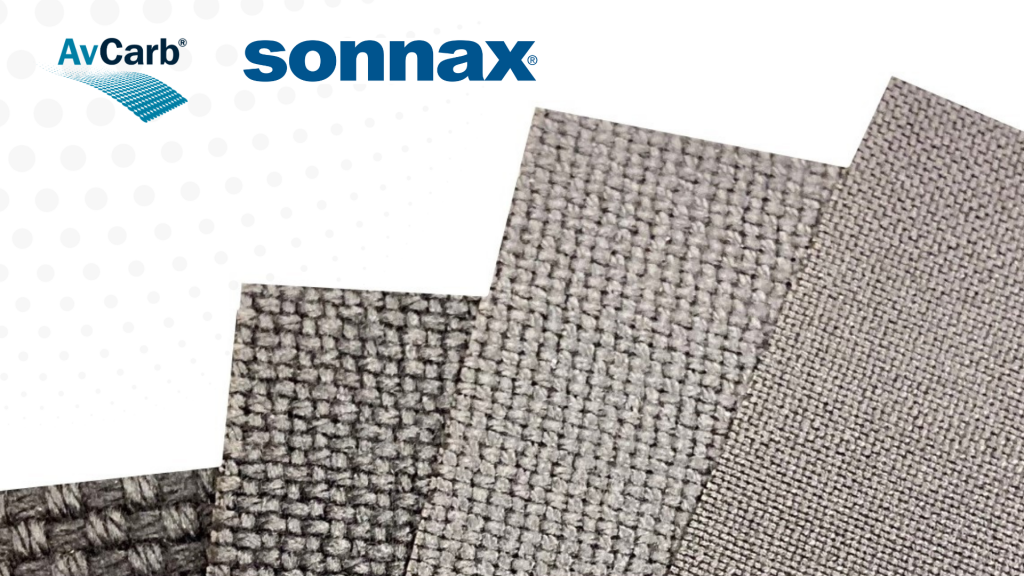
The Importance of Woven Carbon Frictions
Introduction
In the ever-evolving landscape of automotive engineering, the demand for higher performance, greater fuel efficiency and improved durability has driven manufacturers to innovate continuously. One of the most significant yet often overlooked advancements is the development and integration of woven carbon frictions within torque converters. Introduced in model year 1996, this material has since become a key component in modern transmissions, with AvCarb serving as the sole source for original equipment manufacturers. These friction materials play a pivotal role in the seamless operation and longevity of modern vehicles
Understanding Converters and Friction Materials
Torque converters are essential components in automatic transmissions, acting as a bridge between the engine and the transmission. They transmit engine power to the transmission fluidly, allowing the vehicle to stop and start smoothly without stalling the engine. Within the converter, friction materials are crucial for the engagement and disengagement of clutches, facilitating smooth gear changes and torque transfer.
Traditional friction materials were constructed from organic or paper-based composites. While effective, these materials often lacked the thermal stability and durability required for the increased loads and higher operating temperatures seen in modern high-performance powertrains. The integration of woven carbon frictions has addressed many of these challenges, providing a suite of benefits that are transforming automotive transmissions.
Key Benefits of Woven Carbon Frictions
1. Superior Heat Resistance
One of the foremost advantages of woven carbon frictions is their exceptional resistance to heat. During the operation of a torque converter, especially under heavy loads or during aggressive driving, enormous amounts of heat are generated. Traditional materials can degrade, glaze, or even fail under such conditions, leading to diminished performance or transmission failure. Carbon fibers, especially when woven into advanced fabrics, possess remarkable thermal stability, allowing them to maintain their structural integrity and frictional properties even at elevated temperatures.
2. Enhanced Durability and Longevity
Woven carbon friction materials are engineered for resilience. Their robust composition enables them to withstand the repeated cycles of engagement and disengagement that occur within a converter. As a result, components equipped with woven carbon frictions exhibit significantly longer service lives, reducing the need for costly repairs and replacements. This durability is particularly valuable in high-performance or heavy-duty applications, where the stresses on transmission components are especially intense.
3. Consistent Friction Characteristics
Another critical attribute of woven carbon frictions is their ability to provide consistent friction coefficients across a wide range of temperatures and operating conditions. This consistency translates to smoother gear shifts, more predictable vehicle behavior, and a refined driving experience. For manufacturers, this reliability means that they can engineer transmissions with tighter tolerances and more advanced control logic, further enhancing overall efficiency and performance.
4. Improved Transmission Efficiency
By precisely controlling slip and increasing the effectiveness of torque transfer, woven carbon frictions enable converters to operate more efficiently. This efficiency manifests as quicker, more precise gear changes and reduces energy loss within the transmission system. Ultimately, this can contribute to improved acceleration, better fuel economy, and reduced emissions, aligning with the automotive industry’s goals for sustainability and environmental responsibility.
5. Noise, Vibration, and Harshness (NVH) Reduction
Modern drivers demand not only performance but also comfort. The use of woven carbon frictions in converters can help reduce unwanted noise, vibration, and harshness during transmission operation. Their refined engagement characteristics minimize shudder and harshness, contributing to a quieter and smoother ride. They achieve this by maintaining a film of fluid between the piston plate and cover, which cushions engagement events and further dampens vibrations and noise for enhanced driving comfort.
Applications and Industry Adoption
While woven carbon frictions are widely recognized for their superior performance and durability, note that after GM ended 6-speed production they moved away from woven carbon in original equipment (OE) TCC applications for cost purposes.
These days, their OE use is more prominent in other advanced transmission technologies, such as cone synchronizers and dual-clutch transmissions (DCTs). In these systems, woven carbon materials provide the necessary friction characteristics for smooth and reliable gear changes, especially under high-stress conditions.
Challenges and Future Directions
Despite their many advantages, woven carbon frictions are not without challenges. Their production can be more complex and expensive than traditional materials, which can impact on the cost of vehicles and components. Continued research is focused on refining manufacturing processes, reducing costs, and exploring new hybrid materials that combine the best attributes of carbon fibers with other innovative substances.
Looking forward, as electrification and hybridization of powertrains become more widespread, the role of friction materials will continue to evolve. Even in electric vehicles, where traditional transmissions may be replaced by reduction gears or direct-drive systems, the principles of efficient power transfer and durable friction surfaces will remain relevant.
Conclusion
In summary, woven carbon friction has emerged as a cornerstone of modern converter and transmission technology. Their superior heat resistance, durability, and consistency directly translate to improved vehicle performance, efficiency, and longevity. As the automotive industry continues to pursue higher standards for reliability and sustainability, the importance of advanced friction materials such as woven carbon will only grow. For manufacturers and consumers alike, investing in these technologies means embracing a future where innovation drives progress one seamless shift at a time.
Original Article written by Sonnax Transmission Company